When sports field construction is done correctly, it becomes an asset: it attracts users, protects players, reduces downtime,
and keeps maintenance predictable. When it is done “fast and cheap,” it becomes a liability: cracks, puddles, loose turf seams, uneven bounce,
poor lighting, noise complaints, and repeated repairs that cost more than the original project.
AAIF Group delivers Sports Field Construction and Flooring Solutions across the UAE with a single goal:
build facilities that perform under local heat, dust, humidity, and high usage — while staying commercially viable for owners.
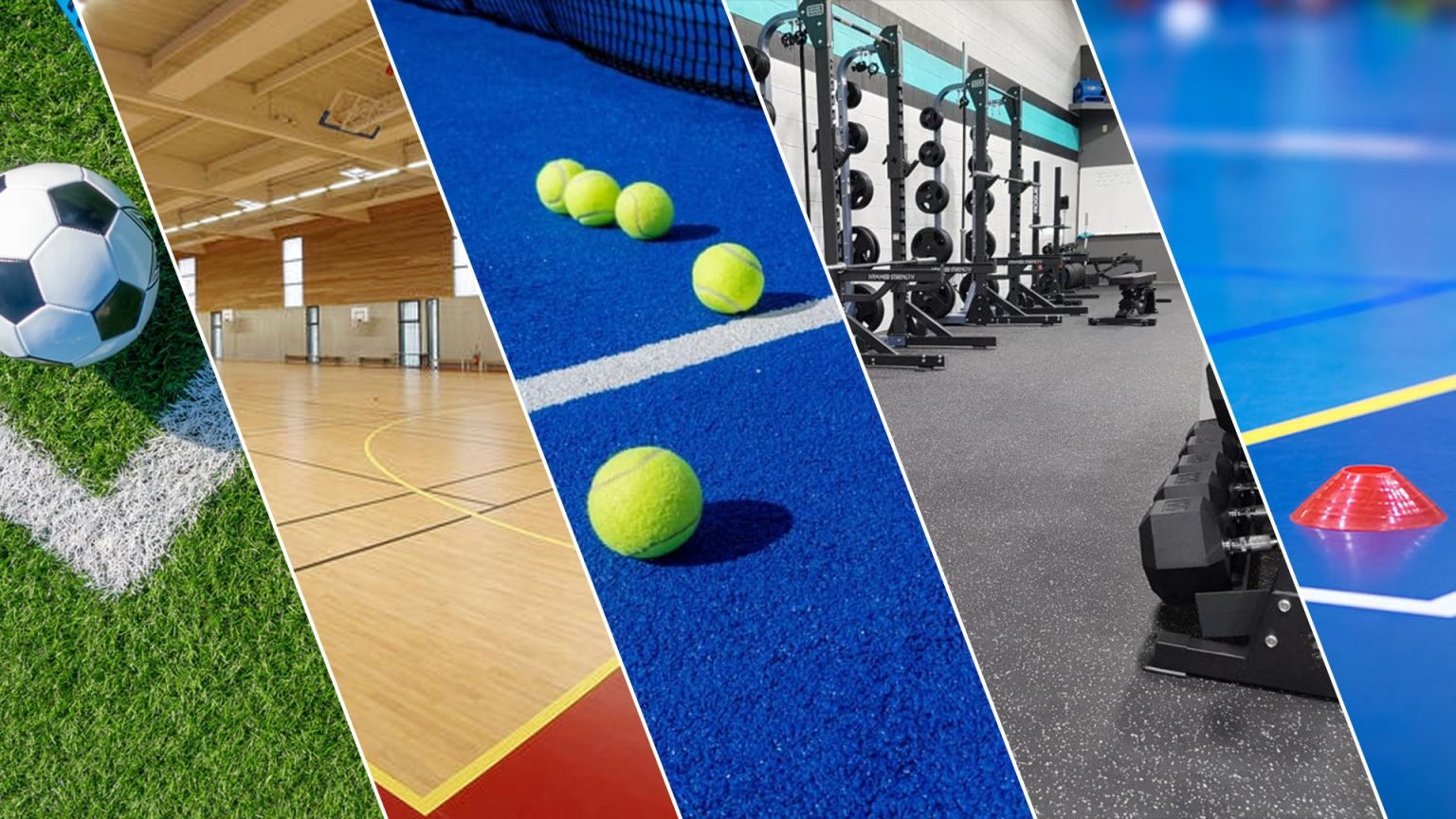
We combine engineering, execution discipline, and sports-surface expertise to deliver padel courts, football pitches, tennis and basketball courts,
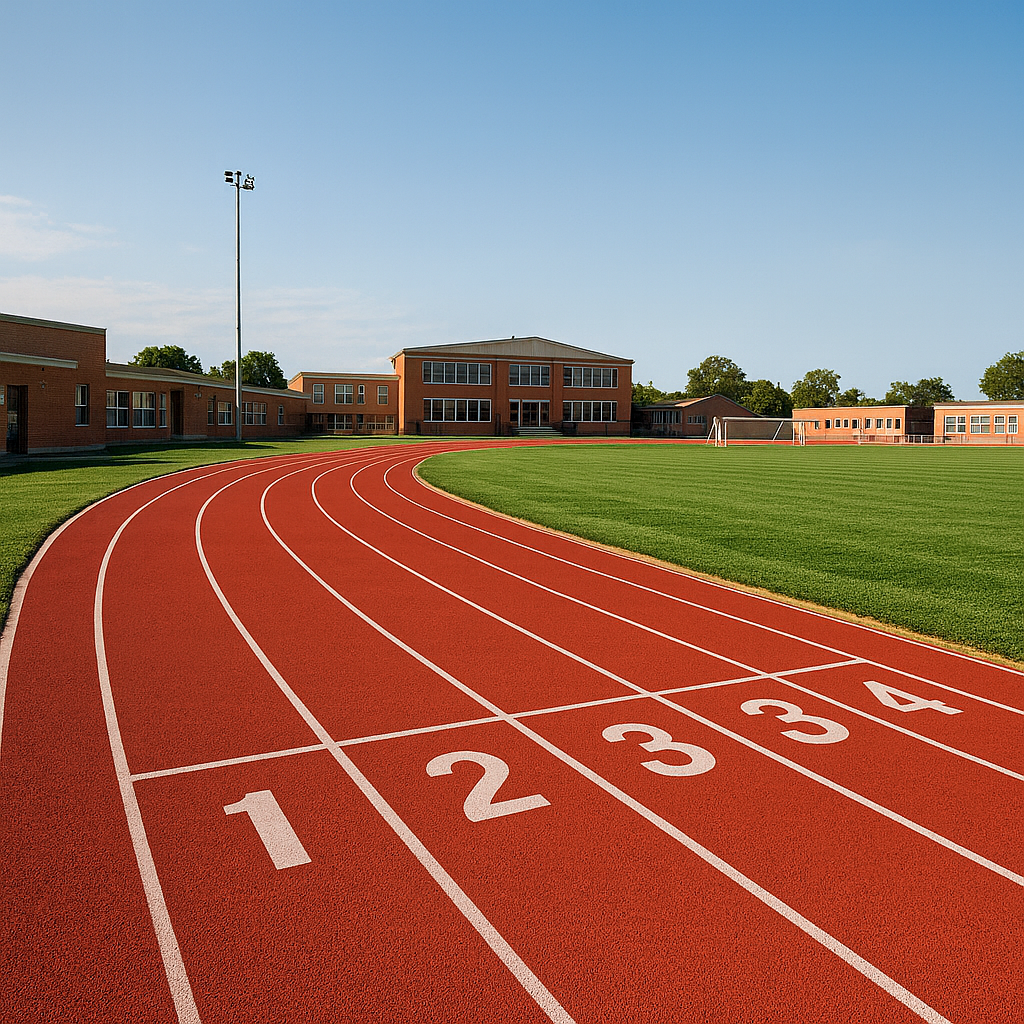
running tracks, multi-sport hubs, and full site packages (fencing, lighting, accessories, and maintenance planning).
If you are an investor, school, developer, club operator, or government entity, use this guide as a practical blueprint.
It’s designed to help you evaluate proposals, avoid common scope gaps, and set your project up for long-term success — not just a “nice opening day photo.”
AAIF Group Home |
Padel Courts Services |
Services |
Projects
Step 1: Define the Strategy Before You Start Sports Field Construction
The fastest way to waste money in sports field construction is to jump into drawings and quotations before you define the strategy.
Start with a one-page brief that answers:
- Who is the main user? (students, members, residents, academy athletes, public community)
- What is the operating model? (membership, pay-per-play, school timetable, event-based)
- What “good” looks like? (lux levels, surface speed, comfort, broadcast readiness, aesthetics)
- Expected usage intensity? (hours/day, peak seasons, tournament frequency)
- Maintenance capacity? (in-house team vs outsourced plan)
- Expansion plan? (add courts later, add shading, add seating, add amenities)
This short brief becomes the control document that keeps scope consistent and prevents hidden exclusions.
It also aligns your consultant, contractor, and management team on what matters most: performance and lifecycle cost — not only capex.
Step 2: Choose the Right Mix of Facilities (Not a Copy-Paste Layout)
The UAE market is diverse. What works in one neighborhood may fail in another.
A smart sports field construction program is built around demographics, competition, and land constraints.
| Facility Type | Best For | Key Technical Focus | Common Add-Ons |
|---|---|---|---|
| Padel courts | Clubs, communities, resorts, villas | Steel + glass package, padel flooring, lighting | Shading/roof, branding, access control |
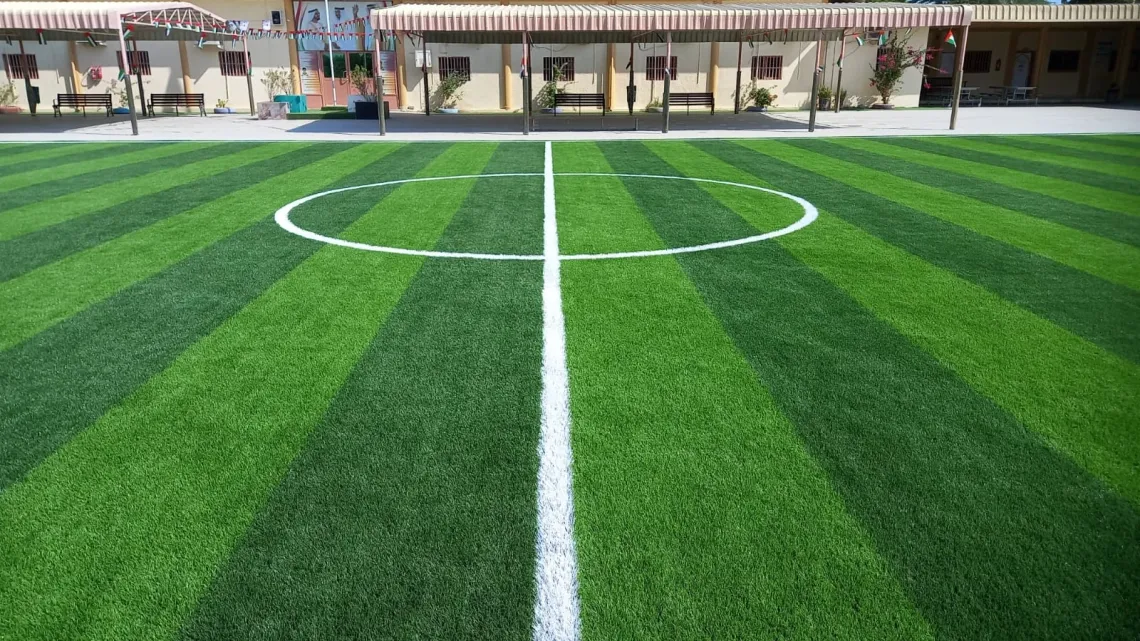
| Football pitches | Schools, academies, community hubs | Base + drainage, turf spec, safety runoffs | Perimeter fencing, netting, LED floodlights |
| Tennis / basketball courts | Compounds, clubs, schools | Acrylic/PU system, leveling, expansion joints | Windbreak, seating, multi-sport line marking |
| Multi-sport courts | Schools, parks, mixed-use developments | Surface selection + line design + durability | Shade structures, modular add-ons |
| Running tracks | Schools, parks, wellness zones | Rubber system build-up, slip resistance | Fitness stations, lighting, signage |
AAIF Group supports planning sessions where we compare layout options with practical constraints:
access, noise, lighting spill, parking, peak hours, and maintenance needs. That planning phase is a small cost compared to a redesign later.
Step 3: Site Survey, Levels & Drainage Logic (Where Most Projects Win or Fail)
In the UAE, dust, heat, and occasional heavy rain storms place real stress on outdoor facilities.
That is why the site survey is not a formality — it is the baseline for correct sports field construction.
- Levels & slopes: controlled falls so water moves away without affecting play.
- Soil behavior: compaction needs, weak zones, and settlement risks.
- Drainage routes: where water goes, how fast it leaves, and what happens during peak rainfall.
- Access & logistics: crane positioning, delivery path, rooftop constraints, working hours.
If you want a reliable reference for football turf performance expectations, the FIFA Quality Programme for Football Turf is a useful benchmark:
FIFA Quality Programme for Football Turf.
It does not replace local engineering, but it clarifies why base prep and installation quality matter as much as turf choice.
Step 4: Sub-Base Standards (The Lifespan Driver in Sports Field Construction)
Owners often focus on the visible finish, but the long-term performance is decided below.
In professional sports field construction, the sub-base is where you protect flatness, drainage, and stability.
What a strong base typically includes
- Excavation and removal of unsuitable material
- Compaction of natural soil to required density
- Geotextile where required to separate layers
- Layered aggregate build-up with controlled grading
- Concrete/asphalt slab (for court systems) with correct joints and finish
- Drainage features appropriate to exposure and site constraints
Good base works reduce cracking, puddling, and uneven bounce — the problems that trigger complaints, refunds, and bad reviews.
If you are comparing quotations, insist on a clear description of each layer, thickness, and compaction requirements.
Step 5: Flooring & Surface Selection by Sport (The “Right System” Beats the “Cheapest System”)
AAIF Group delivers Sports Field Construction and Flooring Solutions that are specified by use-case, not by generic templates.
The correct system depends on athlete profile, usage intensity, and whether the facility is exposed or enclosed.
| Sport / Facility | Typical Surface Options | Decision Priorities |
|---|---|---|
| Padel | Padel turf systems + infill, optional shockpad | Ball bounce, controlled slide, comfort, UV resistance |
| Football | Artificial turf with performance infill, optional shockpad | Drainage, seam integrity, durability in goal areas |
| Tennis | Acrylic systems, cushioned options, tennis-grade turf | Bounce consistency, grip, heat resistance, resurfacing cycle |
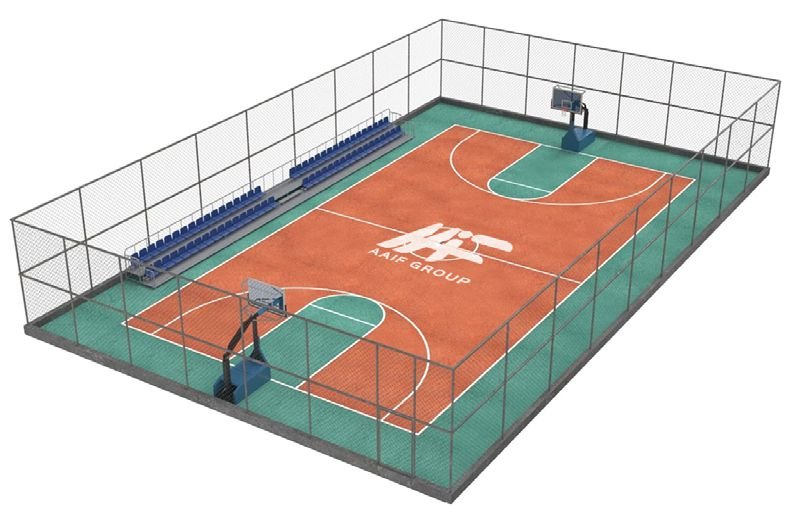
| Basketball | Acrylic / PU / modular tiles (by brief) | Grip + ball rebound, player comfort, line accuracy |
| Running track | Rubber systems (multi-layer) | Slip resistance, cushioning, UV stability |
For tennis dimensions and safety zones, the ITF provides useful references:
International Tennis Federation (ITF) – Tennis Tech.
The same philosophy applies: standards help, but execution quality is what you feel on court.
Step 6: Padel as a Specialized Package (Padel Flooring + Padel Court Maintenance Built In)
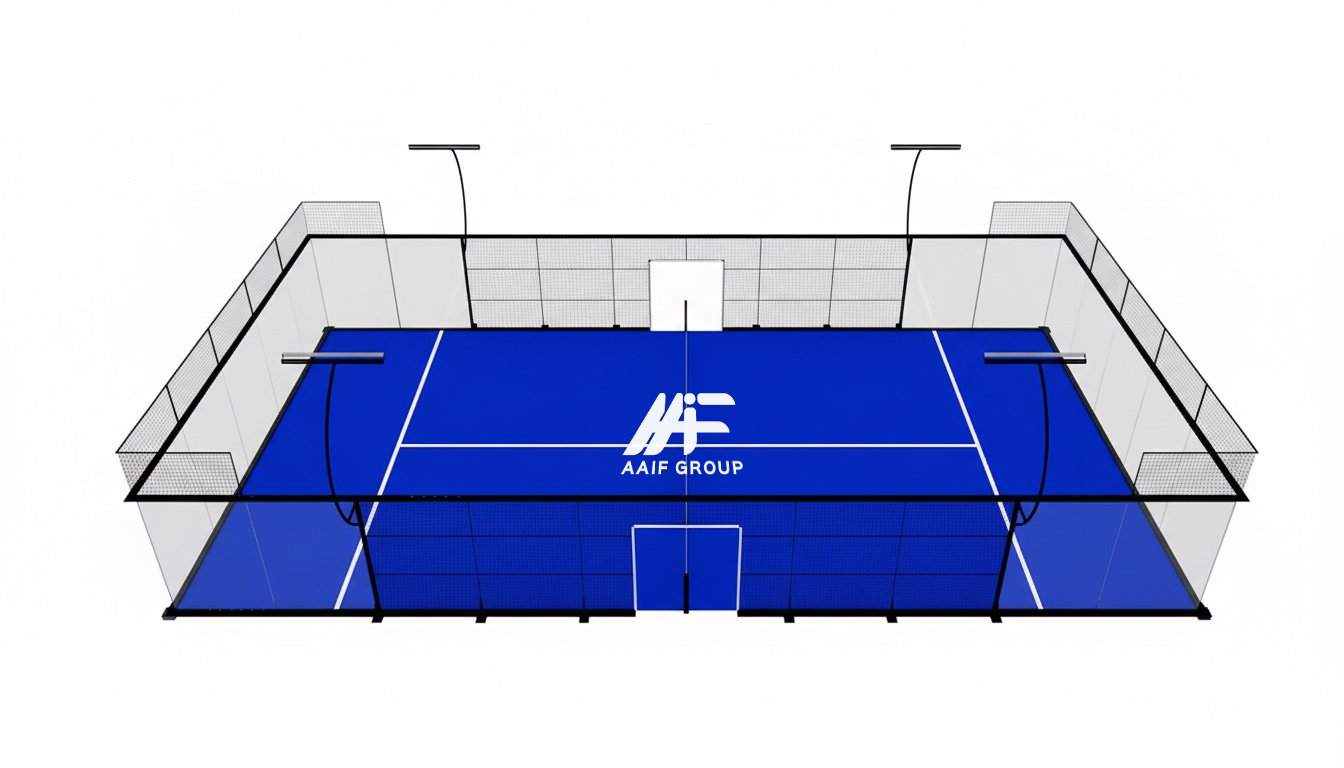
Padel is not just “a court.” It is a full engineered kit: structure, glass, mesh, lighting, gates, net system, and a dedicated playing surface.
That is why AAIF Group treats padel delivery as a controlled package within the wider sports field construction scope.
What makes padel projects succeed long-term
- Correct slab design: flatness, anchor positions, and drainage planning.
- Steel protection: coatings and corrosion strategy for coastal and high-humidity zones.
- Glass safety: certified tempered glass, correct gaskets, alignment and fixings.
- Padel flooring that plays right: consistent bounce, stable infill, UV resistance.
- Lighting that sells the experience: correct aiming, uniformity, and low glare.
- Padel court maintenance plan: brushing, infill control, bolt checks, glass inspection.
For padel rules and standard court requirements, the International Padel Federation is a useful reference:
International Padel Federation (FIP).
Padel flooring: what owners should request in writing
- Type of turf fiber and backing quality
- Infill specification and estimated consumption
- Edge detailing and seam method
- Optional shockpad details (if included)
- Maintenance requirements to protect warranty
Explore our padel delivery approach here:
Padel Court Delivery & Engineering – AAIF Group.
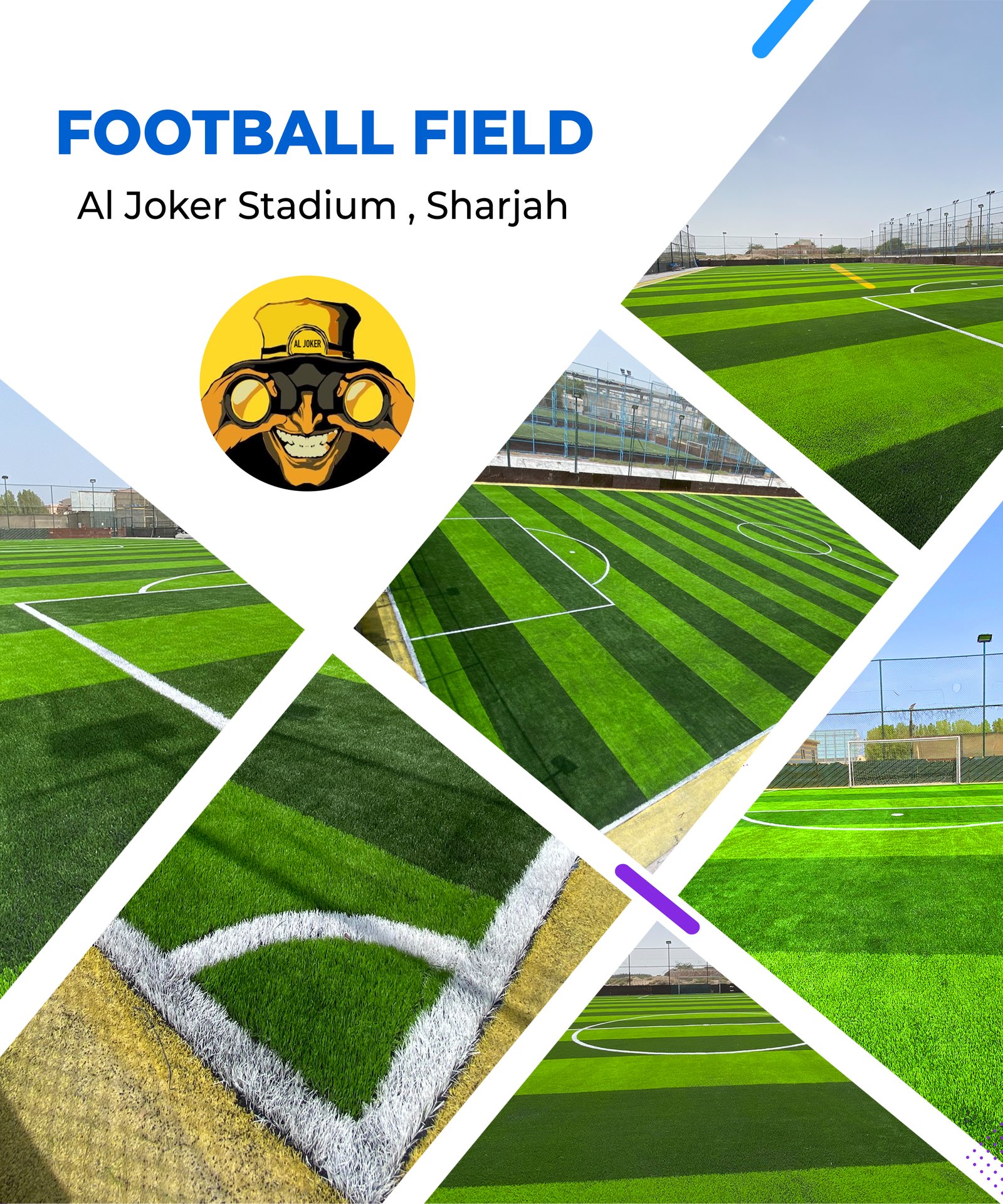
Step 7: Football Fields (Performance + Durability Under Heavy Use)
Football is often the highest-wear area of any site. In UAE conditions, the combination of heat, sand, and constant bookings
means sports field construction must anticipate stress zones (goal mouths, sideline edges, entry points).
Key build decisions that protect football pitch lifespan
- Drainage strategy: avoid “hidden puddles” and base softening.
- Shock absorption: optional pads where required by brief and usage.
- Seam integrity: correct joining method and quality control checks.
- Perimeter design: curbs/edges and transitions that don’t fail first.
- Lighting & containment: netting, fencing, and aiming for safe night play.
Owners who plan maintenance from day one typically get better surface stability and fewer emergency repairs.
That maintenance integration is part of AAIF Group’s Sports Field Construction and Flooring Solutions.
Step 8: Courts (Tennis, Basketball, Volleyball) + Multi-Sport Planning
A common mistake is treating courts as “paint on concrete.” In reality, court performance depends on leveling, joint strategy,
surface chemistry (acrylic/PU systems), and line accuracy. When you invest in sports field construction,
courts should feel predictable and safe — not slippery, patchy, or inconsistent.
Tennis
- Base flatness and controlled slopes
- Correct coating build-up and curing discipline
- Fencing height, windbreak strategy, and gate safety
Basketball
- Grip and ball rebound consistency
- Hoop foundations and alignment
- Clear safety runoffs and durable line marking
Volleyball
- Indoor vs outdoor system selection
- Safe foundations for posts and tension systems
- Layout planning for player movement and runoffs
When space is limited, multi-sport courts can deliver strong ROI — but only if line planning and surface selection match real usage.
AAIF Group supports layout planning so facilities stay functional instead of visually “busy.”
For volleyball references, the FIVB publishes global guidance and standards:
International Volleyball Federation (FIVB).
Step 9: Lighting, Fencing, Access & User Experience
A facility can have a strong surface and still fail commercially if the experience is weak.
In sports field construction, the “support systems” are what users notice immediately: lighting quality, safety, access flow, and comfort.
Lighting
- Uniformity matters more than “high wattage”
- Glare control improves player comfort and reduces complaints
- Correct aiming reduces light spill and neighborhood issues
Fencing & containment
- Correct height and mesh type by sport
- Gate placement that works with circulation and safety
- Corrosion strategy for coastal environments
Access & flow
- Safe entry points that protect surfaces (especially padel turf and court coatings)
- Walkways and thresholds that prevent sand migration onto playing areas
- Seating, shade, and small details that increase repeat bookings
Step 10: QA/QC, Handover & Documentation (The Difference Between “Installed” and “Delivered”)
The most professional sports field construction projects include quality gates:
checks that confirm flatness, drainage behavior, line accuracy, and safe installation of structural items.
Typical QA/QC checkpoints
- Base levels and slope verification before surfacing
- Material approvals and submittals (turf, coatings, adhesives, rubber)
- Installation method statement compliance on site
- Lighting aiming checks and functional testing
- Final snagging list and closeout documentation
AAIF Group provides handover packs and operational guidance so owners know how to run the facility without guesswork.
This protects warranties and reduces long-term cost.
Step 11: Maintenance Planning (Where Real ROI Is Protected)
Maintenance is not an optional “later problem.” It is part of successful sports field construction.
Your surface and structure lifespan depends on simple, consistent routines.
| Asset | Routine | Typical Frequency |
|---|---|---|
| Padel turf (padel flooring) | Brush, redistribute infill, remove debris | Weekly / based on usage |
| Padel court maintenance (structure + glass) | Inspect fixings, check glass alignment, tighten bolts | Monthly / quarterly |
| Football turf | Brush, decompact infill, seam inspection | Weekly / monthly |
| Acrylic/PU courts | Cleaning, spot repairs, repaint cycle planning | Ongoing / seasonal |
| Lighting | Cleaning lenses, check aiming, electrical inspection | Quarterly / biannual |
If you want track and athletics references, World Athletics provides global guidance:
World Athletics.
Budget Structure & Smart Value Engineering (Without Damaging Performance)
Pricing in sports field construction varies by site condition, access, and specification.
The best practice is to break budgets into clear blocks so you can compare quotations fairly:
- Civil works: excavation, sub-base layers, slab/asphalt, drainage
- Surface system: turf or coatings or rubber build-up
- Structures & accessories: steel, glass, fencing, goals, hoops, nets
- Lighting & electrical: fixtures, poles, conduits, connections
- Operational items: access control, branding, seating, shade
- Maintenance plan: initial period support and long-term strategy
“Value engineering” should reduce waste, not remove critical layers. Good cost optimization examples include:
- Use premium specs in high-wear zones and balanced specs elsewhere
- Plan shared infrastructure (drainage routes, lighting layouts) for multi-court sites
- Design expansion-ready bases to avoid demolition later
Why AAIF Group for Sports Field Construction and Flooring Solutions?
AAIF Group is an integrated sports infrastructure group in the UAE, delivering end-to-end scopes for courts, fields,
and full sports environments. Through our specialized entities, we support design, supply, installation, and maintenance.
- Al Amal Al Sarea:
sports courts & fields construction, flooring systems, and maintenance delivery. - Al Mustaqbal Al Sarea:
sports accessories, equipment solutions, and supply support for facilities. - Infinity Middle East Industries:
engineering services, upgrades, and technical execution capability. - Forsan Al Amal Al Sarea:
additional capability in sports manufacturing and playground/sports asset support.
This structure allows one accountable delivery partner across the project lifecycle — planning, execution, quality control,
and post-handover support — which is exactly what high-performing sports field construction requires.
Tennis Court Construction in the UAE: What Actually Makes a Court “Play Right”?
Many projects look like a tennis court on day one, but only a properly engineered tennis court construction package
will keep the bounce predictable, the grip consistent, and the surface stable through UAE heat cycles.
The difference is rarely the paint — it is the base build-up, leveling discipline, joint strategy, and the chosen surface system.
Key engineering decisions in tennis court construction
- Base flatness & slopes: controlled tolerances to prevent “dead spots” and water pooling on outdoor courts.
- Crack control: correct concrete/asphalt preparation, joints detailing, and surface build-up that handles thermal movement.
- Surface system selection: hard court acrylic, cushioned acrylic, or tennis-grade synthetic systems depending on player profile.
- Line marking accuracy: ITF-aligned dimensions, clean edges, and durable coating layers.
- Perimeter & wind management: fencing heights, gates, and optional windbreak systems planned around actual site conditions.
For baseline technical references on court categories and performance, you can review the guidance published by the
International Tennis Federation (ITF) – Tennis Tech.
AAIF Group translates these expectations into buildable specifications that match your site, usage intensity, and maintenance capacity.
Sports Flooring: Choosing the Right System (Not Just a Finish)
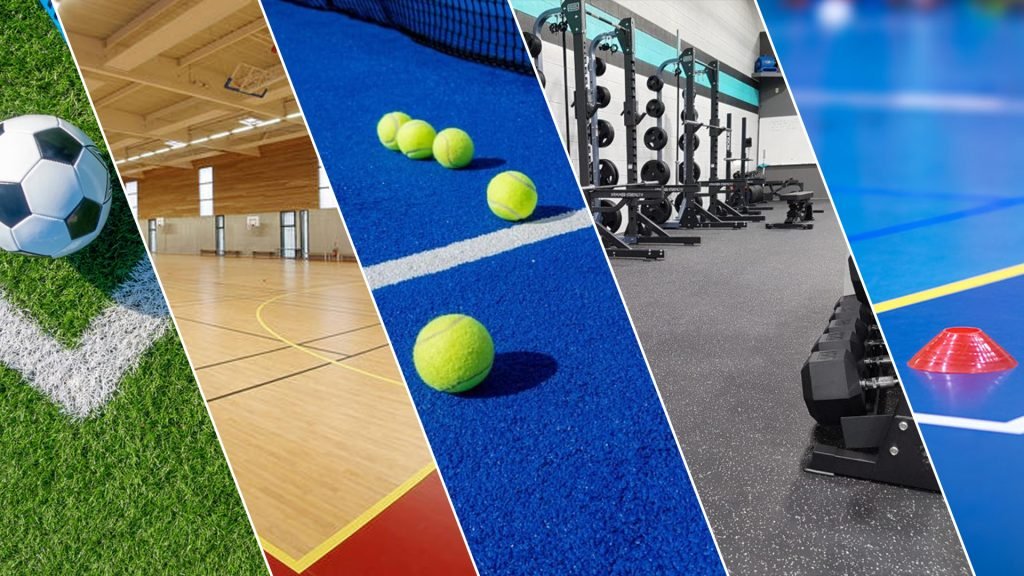
“Sports Flooring” is often treated as a product choice, but in high-performing facilities it is a system decision.
The right floor controls safety (slip resistance), comfort (shock absorption), and performance (ball response) — while also
defining the maintenance cycle and lifetime cost.
Sports Flooring options AAIF Group delivers (selected by use-case)
| Sports Flooring Type | Best For | Why It Works |
|---|---|---|
| Acrylic sports flooring | Outdoor tennis, basketball, multi-sport courts | UV-resistant, good grip, predictable ball behavior with correct build-up |
| PU sports flooring | Indoor multi-purpose halls, schools, academies | Comfort + shock absorption, consistent play, suitable for frequent training |
| Rubber flooring | Gyms, functional training, kids areas | Impact absorption, durability under heavy loads, easy maintenance |
| Modular sport tiles | Fast installation areas, community courts, event-ready spaces | Quick deployment, drainage-ready options outdoors, replaceable panels |
| Padel turf systems | Padel courts | Engineered ball bounce + controlled sliding, supports commercial usage |
How to select Sports Flooring correctly
- Sport behavior: ball bounce, player slide, and foot grip requirements differ dramatically by sport.
- Environment: indoor vs outdoor changes UV, temperature movement, and cleaning needs.
- Usage intensity: a school court and a paid-rental court require different durability strategies.
- Maintenance reality: choose a system your team can actually maintain, not one that looks good on a brochure.
If you want the floor to stay “premium” after year one, the decision must include the maintenance plan from day one.
AAIF Group supports owners with selection guidance, installation QA, and lifecycle planning so your Sports Flooring choice
stays stable, safe, and commercially usable.
Internal resources:
AAIF Group Services |
AAIF Group Projects

FAQ: Sports Field Construction in the UAE
How long does a typical project take?
Timelines depend on scope, approvals, and site readiness. Single courts can move faster once the base is ready,
while multi-facility sites require phased planning and controlled logistics.
What makes UAE projects different from other markets?
Heat, UV exposure, sand migration, and occasional heavy rain events mean the detailing and materials must be selected
for long-term stability — especially in outdoor installations.
Can you combine padel, football, and courts in one masterplan?
Yes. In fact, mixed facilities often achieve stronger utilization. The key is sharing infrastructure smartly
while keeping each sport’s performance requirements intact.
How do we avoid “hidden exclusions” in quotations?
Request a clear scope split (civil works, surface system, fencing/structure, lighting/electrical, accessories, maintenance)
and confirm what is excluded in writing.
Start Your Sports Field Construction Project with AAIF Group
If you want sports field construction that performs day-to-day — not just on handover day —
AAIF Group can support you from concept to completion, including flooring systems, structures, lighting, fencing,
accessories, and maintenance planning.
For site visits, proposals, or technical consultations:
+971522005623
Explore our services:
AAIF Group Services