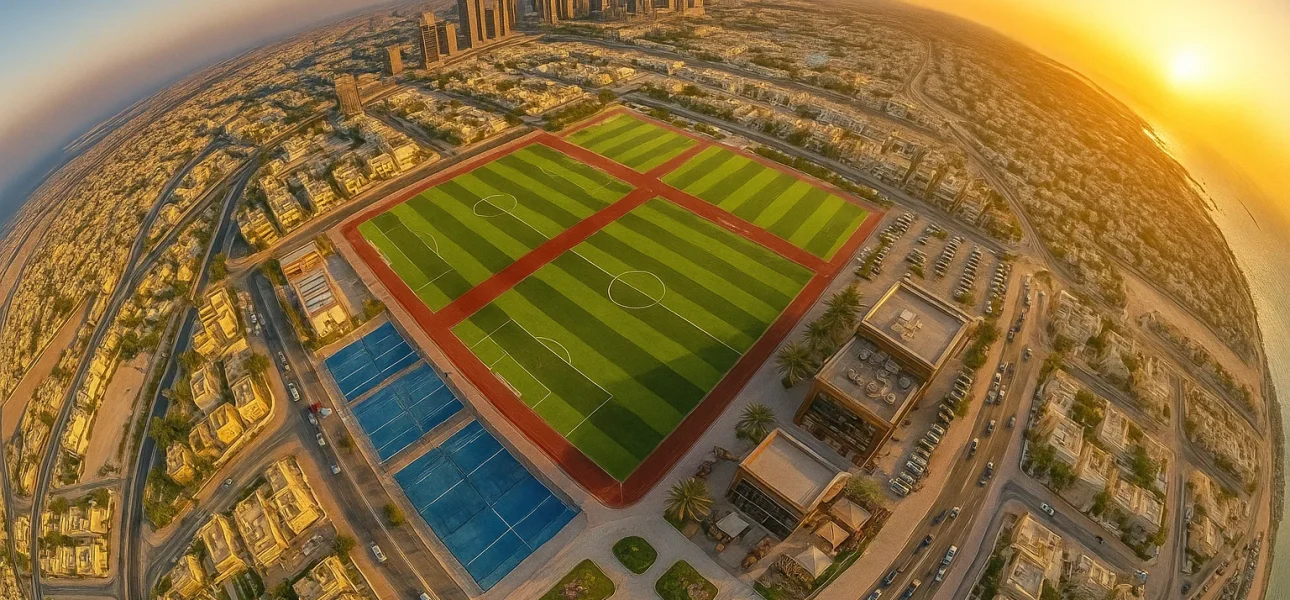
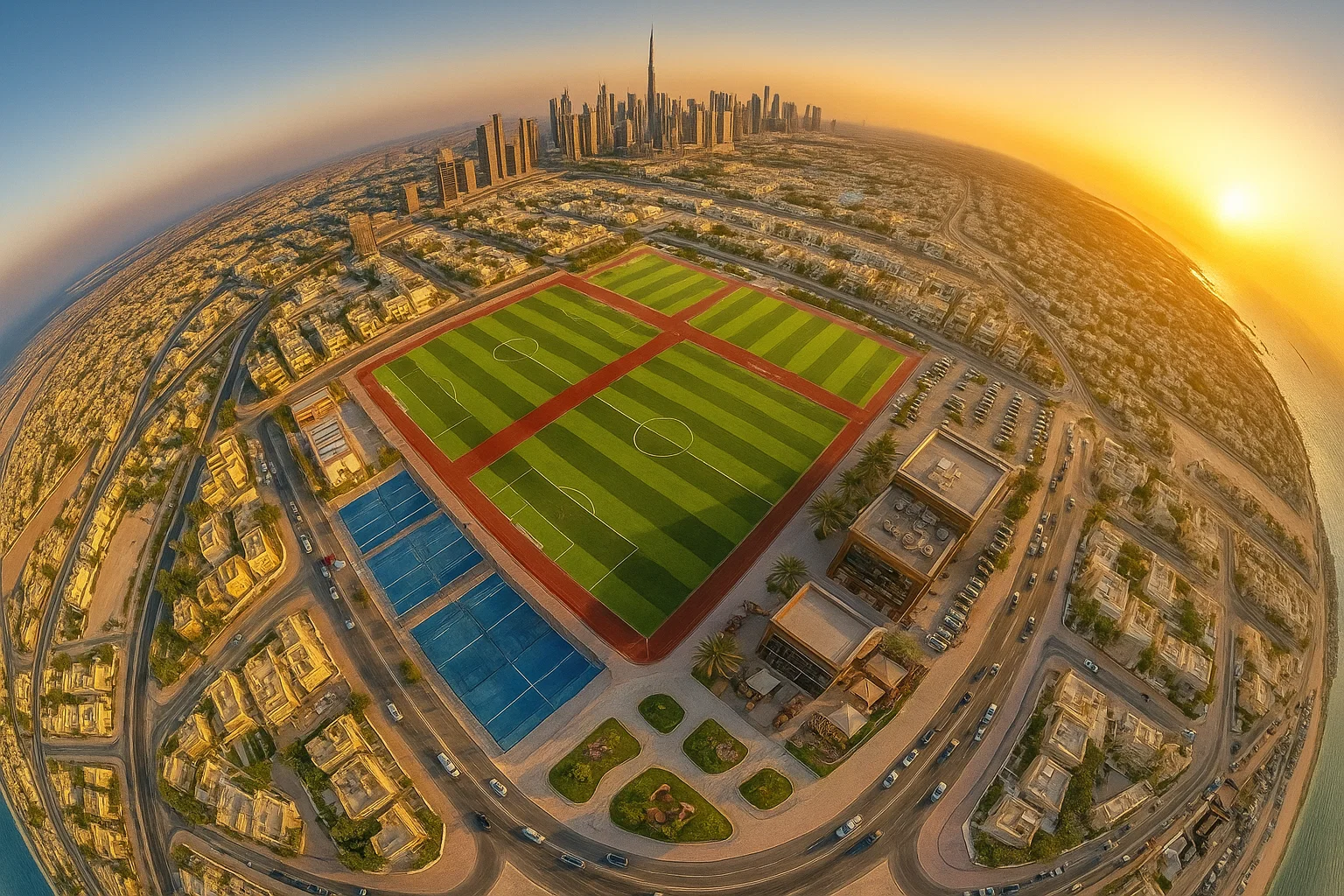
 Sports court construction uae is not a simple build and finish job. In the Emirates, courts must contend with intense heat, UV exposure, sand and dust, high daily usage, and occasional heavy rain events that expose any weaknesses in slope or drainage. The difference between a court that looks great on handover day and a court that performs for years comes down to one thing: delivering the court as an engineered system, not as a surface layer. This guide explains how professional teams approach sports court construction uae from concept to handover, with practical acceptance checkpoints, system selection logic, and site-proven controls. It is written for owners, consultants, project managers, and investors who want a reliable outcome and a clear process they can audit.
Quick Answers and Fast Decisions
What decides success in sports court construction uae?
Success is decided by two priorities: base readiness and drainage first, then surface installation discipline and interface detailing. Most failures come from skipping base acceptance, sealing in moisture, allowing dust contamination during bonding, or improvising edges and transitions near the end.
What should owners request before signing a contract?
- Measurable base acceptance criteria for levels, slopes, and compaction, with a signed acceptance record.
- A drainage verification plan with a practical flow test and protected access points.
- A system-compliant method statement for the chosen surface, including curing windows and thickness controls.
- QA QC checklists and inspection logs, not just photos after completion.
- A handover pack with as built drawings and a maintenance plan your team can execute weekly.
Which court types drive the highest demand in the UAE?
- Padel Court Construction UAE for clubs, schools, hotels, and private developments.
- Multi sport court builds for communities and schools with high daily utilization.
- Football training pitches and small-sided courts where artificial turf is preferred.
- Basketball and tennis courts with acrylic or PU systems for predictable performance.
- Covered courts to reduce heat impact and extend operating hours.
When should you choose a turnkey delivery model?
If your project includes base works, drainage, surface systems, lighting, fencing, and accessories, turnkey delivery reduces risk. This is why many buyers search for Turnkey Sports Facility Builders. One accountable delivery team reduces scope gaps, interface conflicts, delays, and rework.
UAE Reality Check: Why Courts Fail and How to Prevent It
The UAE is a performance stress test for outdoor assets. Heat accelerates curing, UV stresses materials, sand and dust contaminate bonding surfaces, and high utilization exposes weak zones quickly. Many issues labeled as material defects are actually process defects amplified by the climate.
UAE stressors that change construction outcomes
- High temperature and UV exposure increase thermal movement and weaken edges if detailing is poor.
- Dust contamination reduces adhesion of primers and coatings and creates early delamination risk.
- Occasional heavy rain immediately exposes slope errors and blocked drainage routes.
- High daily utilization pushes surfaces beyond light-use assumptions and magnifies maintenance gaps.
- Mixed site logistics allow other trades to damage the base or block channels before handover.
Prevention that works on real UAE sites
- Document-based acceptance before surface works begin, using simple measurable checkpoints.
- Verify drainage using a practical flow test, then protect channels and access points during all remaining works.
- Manage dust actively, especially during priming, bonding, and coating applications.
- Detail interfaces early, including drains, thresholds, posts, fencing, glass zones, and perimeters.
- Define a maintenance plan at the procurement stage, not after defects appear.
What Sports Court Construction Really Includes.
Owners often focus on the visible surface, but sports court construction uae is a system delivery scope. A professional court includes survey, base engineering, drainage, surface system installation, and the interface details that protect safety and durability. If any layer is weak, the surface will fail earlier than expected.
| System Layer | Purpose | Common Failure if Ignored | Practical Acceptance Check |
|---|---|---|---|
| Survey and setting out | Locks layout, levels, and falls | Misalignment, unsafe run-off zones | Setting out records and drawings |
| Formation and grading | Creates stable platform and initial falls | Settlement and unevenness | Level survey log |
| Sub base | Supports loads and maintains stability | Soft spots and deformation | Compaction records and spot tests |
| Drainage | Moves water away fast | Pooling, algae, slip risk | Flow test and access verification |
| Base course | Stable substrate for surface systems | Reflective cracking, delamination | Flatness and cure readiness |
| Surface system | Traction, ball response, comfort | Unsafe play, early wear | Inspection, thickness checks, snag list |
| Interfaces and accessories | Edges, drains, posts, fencing, glass zones | Trip hazards, tearing, and water traps | Interface inspection and sign off |
| Maintenance plan | Protects performance and lifecycle value | Fast deterioration and disputes | Training record and schedule |
Sports Court Construction UAE for High-Use Facilities in Dubai
Choosing Sports Court Construction UAE is not about picking a surface and starting work. In the Emirates, a court must perform under heat, UV, dust, high foot traffic, and occasional heavy rain. That is why Sports Court Construction UAE should be delivered as a complete engineered scope: layout accuracy, sub-base stability, verified drainage, surface system installation, interface detailing, and an owner-ready handover. When Sports Court Construction UAE is treated like engineering, not finishing, you get predictable playability, consistent safety, and a court that holds its quality over time.
In Dubai, demand for Multi-Sport Court Construction Dubai is accelerating across schools, residential communities, hotels, academies, and private clubs. A multi-sport court is a high-utilization asset, and it must balance different performance requirements while staying clear, safe, and easy to operate. For that reason, Sports Court Construction UAE for multi-sport projects must start with a clear usage model. If you build a multi-sport court without defining the sport priorities, line hierarchy, and maintenance reality, the result is often confusion on the surface, premature wear in high-impact zones, and operational friction that reduces bookings.
What makes Multi-Sport Court Construction Dubai different
A successful Multi-Sport Court Construction Dubai project requires two things at the same time: sport performance and operational practicality. That is why professional Sports Court Construction UAE focuses on measurable controls that owners and consultants can audit. The layout must be locked early, safety run-off zones must be respected, and the surface system must match the intensity of use. In high-traffic environments, Sports Court Construction UAE must also account for cleaning routines, dust build-up, and how quickly the facility can respond to small defects before they grow.
Sports Court Construction UAE is a complete system.
The biggest mistake in Sports Court Construction UAE is treating the surface as the project. The surface only performs as well as the base and drainage beneath it, and the interfaces around it. For Multi-Sport Court Construction Dubai, this matters even more because the court is used more frequently and by wider user groups. A professional Sports Court Construction UAE scope typically includes survey setting-out, controlled sub-base installation, slope and level verification, drainage flow testing, surface installation with documented method statements, and clean finishing at every edge and transition.
Key execution controls that protect performance.
- Base acceptance before surface work: Sports Court Construction UAE should include clear level and slope checks, plus compaction evidence where applicable.
- Drainage verification: a practical flow test confirms the court will not suffer pooling issues after completion. This is a non-negotiable step in Sports Court Construction UAE.
- Dust-control discipline: bonding, priming, and coating activities must be protected from contamination, especially in outdoor Multi-Sport Court Construction Dubai sites.
- Interface detailing: edges, thresholds, posts, fencing zones, and drainage transitions must be detailed early, not improvised at the end of Sports Court Construction UAE.
- Documented QA/QC: inspection logs and snag closure records make Sports Court Construction UAE transparent and reduce disputes at handover.
Why owners choose Sports Court Construction UAE with a turnkey mindset
Most failures in Sports Court Construction UAE come from scope gaps between trades: civil works, drainage, surface works, lighting, and fencing. In Multi-Sport Court Construction Dubai, these gaps show up fast because the facility moves into heavy utilization quickly. A turnkey approach reduces coordination risk, keeps accountability clear, and protects the schedule. More importantly, it protects performance because each stage is verified before the next stage begins, which is the real difference between average delivery and premium Sports Court Construction UAE.
Outcome: a court that plays right, drains right, and lasts
The goal of Sports Court Construction UAE is not only a clean-looking court. The goal is stable playability, safe traction, consistent line clarity, and long-term durability under UAE conditions. When Multi-Sport Court Construction Dubai is delivered with a system approach, the court stays usable with fewer interruptions, maintenance becomes simpler and more predictable, and the facility maintains a premium experience that supports bookings and reputation. If you want Sports Court Construction UAE that performs at a high level in real use, the process and controls matter as much as the materials.
Types of Sports Courts Commonly Built in the UAE
The UAE market is diverse. Schools, academies, clubs, residential communities, hospitality, and developers all require different court performance priorities and operating models. A smart build starts by selecting the right court type and surface system for your use case, then engineering the base and drainage to match.
High-demand court types
- Padel courts for clubs and hospitality projects, where aesthetics, flatness, and lighting matter.
- Basketball courts for communities and schools, often acrylic or PU-based.
- Tennis courts with acrylic systems for predictable ball response and recoating cycles.
- Volleyball courts with indoor synthetic systems or beach sand systems, depending on venue.
- Multi-sport courts are designed for multiple games, balancing performance trade-offs.
- Football training courts and small-sided pitches where turf and drainage are key.
Location-driven demand example
In Dubai, many buyers search for Multi Sport Court Construction Dubai because communities and schools require flexible, high-utilization spaces. The right design depends on sport priorities, safety run-off zones, and a surface system that your team can maintain without fail.
Design Fundamentals: Layout, Safety, Orientation, and Use Model
Professional sports court construction uae starts with design decisions that protect safety and usability. A court can be built correctly but still fail operationally if the layout ignores run off space, orientation, lighting glare, spectator flow, or maintenance access.
Start with the use model, not the brochure
- Primary sport and level community play versus academy and competition.
- Utilization hours per day, which drives durability and maintenance intensity.
- Indoor, covered, or outdoor exposure, which affects surface selection and detailing.
- Maintenance capacity: what your team can do weekly, not what is ideal on paper.
- Downtime tolerance, whether you can close the court for recoating or repairs.
Safety, run off space, and user flow.
Many disputes come from underestimated safety space. Run-off zones, fence offsets, lighting pole locations, and access points should be resolved early. For multi sport layouts, line hierarchy must be agreed with stakeholders so the court remains clear, not visually confusing.
Orientation and lighting planning
Orientation affects player comfort, glare, and filming quality. Lighting is not only about brightness, but it is also about uniformity, glare control, pole placement, and maintenance access. For premium projects, include a lighting performance requirement and keep it within a single accountable scope to reduce coordination gaps.
Sub Base and Drainage: The Performance Foundation
If you want long-term performance, focus on what sits below the surface. Sub base and drainage are the most important drivers of lifecycle cost. A premium surface installed on a weak base produces a weak court. This is where professional teams win projects, by controlling base stability, levels, slopes, and water management. Sports Court Construction UAE.
Sub base goals
- Stable support without settlement or soft zones.
- Consistent levels across the full court area.
- Controlled falls that move water where it needs to go.
- Clean separation layers when required to avoid contamination migration.
Drainage goals
- Fast water removal during rain events and wash down cleaning.
- Clear, protected drainage routes that do not clog during construction.
- Accessible inspection points and maintenance-friendly channels.
- Correct transitions at edges to prevent water traps and algae.
Acceptance Gate concept for base and drainage
Before surface installation begins, the project must pass a base acceptance gate. This gate is simple but strict: levels and slopes verified, compaction confirmed, and drainage flow tested. Without this gate, your project risk increases sharply,ذ and defects become expensive to fix later.
Court Surface Systems: How to Choose the Right Flooring
Surface selection should be driven by performance priorities and operational reality. In the UAE, the best system is not the most expensive; it is the one matched to your usage intensity, exposure conditions, and maintenance capability. Below is a practical system overview for sports court construction uae.
Surface selection matrix
| Priority | Best Fit Systems: Why | Why it Fits | Key Watch Outs |
|---|---|---|---|
| High utilization outdoor court | Acrylic or turf, depending on the sport | Durable, predictable maintenance cycles | Base cracking, drainage, and dust control |
| Comfort-focused premium court | PU elastic system | Better cushioning and traction | Moisture management and curing windows |
| Fast renovation and replaceability | Modular sports tiles | Speed and local replacement ability | Base flatness and perimeter restraint details |
| Football training and small-sided pitches | Artificial turf with an optional shock layer | Stable scheduling and playability | Seams, infill management, drainage |
| Padel performance and aesthetics | Padel turf system with controlled sand | Stable play and premium look | Flatness, edge interfaces, and lighting uniformity |
Acrylic court systems
Acrylic is common for tennis and multi-use courts because it provides clean aesthetics, predictable ball response, and refresh through recoating. Success depends on base quality, surface preparation, priming discipline, layer timing, and accurate line marking.
PU elastic court systems
PU systems are selected for comfort and traction. They are sensitive to moisture and curing, which is why preparation and controlled application windows matter. PU is often a strong choice for premium community courts and indoor halls when maintenance is disciplined.
EPDM and rubber systems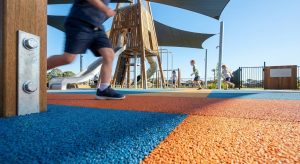
Rubber based systems are used for athletics, safety zones, and specialized applications. They demand thickness control and consistent bonding. In the UAE, high wear zones require reinforcement and careful detailing.
Modular sports tiles
Modular tiles can be effective for fast builds and renovations. They still require base flatness and proper perimeter restraint to prevent movement and noise. Water traps can appear if slopes are incorrect.
Artificial turf systems
Turf is common for football training courts, small-sided pitches, and some multi-use areas. When people search for Artificial Turf Installation for Sports Courts UAE, they usually want a surface that supports heavy use with controlled maintenance. The key controls are drainage performance, seam integrity, correct infill levels, and consistent brushing and cleaning.
Padel turf systems
Padel surfaces demand strict flatness and controlled sand behavior. This is why Padel Court Construction UAE is its own major search cluster. Performance and aesthetics depend on base tolerance, correct edge detailing around glass and fencing zones, and disciplined lighting planning.
Step-by-Step Delivery Workflow with Acceptance Gates
A repeatable workflow reduces disputes and rework. Below is a practical delivery sequence used in professional sports court construction uae, written so owners and consultants can audit progress and quality without guessing what should happen next.
Step-by-step workflow
- Define sport intent and utilization confirm primary sport, secondary uses, and expected daily hours.
- Lock the layout and line hierarchy dimensions, run off space, and multi-sport line priority.
- Confirm site constraints, access routes, utilities, soil behavior, and drainage outfall.
- Agree on the drainage concept, including falls, channels, inspection points, and outfall logic.
- Select the surface system align surface type, layers, and accessories to operational reality.
- Approve the method statement sequence, curing windows, thickness controls, and quality checkpoints.
- Mobilize logistics storage, shading, dust control, and safe access routes.
- Set site protection rules protect drains and keep the base clean from contamination.
- Prepare formation, remove unsuitable material, and establish initial grading.
- Install separation layers if required, prevent contamination migration, and improve stability.
- Build the sub base in controlled lifts of engineered aggregates with compaction control.
- Set final falls and flatness laser levels, recorded surveys, and corrective actions.
- Install drainage components, channels, pipes, access points, and protection from debris.
- Construct the base course asphalt or concrete as required, with correct curing readiness.
- Acceptance Gate 1: verify levels, slopes, compaction evidence, and drainage flow test.
- Substrate cleaning protocol: Confirm dryness and remove dust before bonding and coatings.
- Begin surface installation, apply system-compliant methods with trained crews.
- Keep installation control logs, record batches, curing times, seams, and thickness spot checks.
- Detail interfaces and edges, drains, thresholds, posts, fencing, and glass zones.
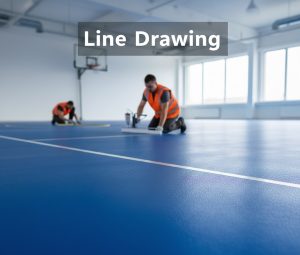
- Line marking and graphics measure, mask, apply, and verify crisp edges and widths.
- Acceptance Gate 2 finish inspection, snag list, safety walk-through, and corrections closed.
- Commissioning checks, practical performance checks relevant to the sport and surface.
- Handover pack and training as built drawings, maintenance plan, training, and responsibilities.
Common workflow mistakes that cause defects
- Starting surface works before base acceptance and drainage flow testing.
- Priming or bonding on dusty substrates, then blaming adhesion failures on materials.
- Improvising edge details late, which creates trip hazards and water traps.
- Ignoring curing windows due to schedule pressure, which reduces system lifespan.
- Skipping handover training, leading to incorrect maintenance and early deterioration.
QA QC, Testing, and Handover Package
Quality is measurable evidence. In professional sports court construction UAE, QA QC is not paperwork for the file; it is the method that protects both the owner and the contractor. When QA QC is done correctly, disputes reduce and lifecycle value increases.
Minimum QA QC checks to request
- Levels and slopes documented readings before surface installation.
- Drainage verification, practical flow testing, and confirmation of accessible points.
- Surface finish checks seams, thickness, texture uniformity, and line accuracy.
- Interface inspection drains, thresholds, posts, fencing zones, and perimeters.
- Snag closure evidence photo logs with a clear sign-off per item.
- Maintenance training schedule, tools, and do and do not instructions.
Authority references that owners and consultants recognize
Cost Drivers and Typical Timeline Logic in the UAE
Buyers often ask for a single number, but reliable budgeting requires understanding what moves the cost. Two courts can have the same surface and very different performance and lifecycle costs because the base, drainage, and interface scope differ. The best approach is to procure as a complete system, with clear acceptance gates and defined deliverables.
Primary cost drivers
- Sub base and drainage scope is often the largest performance driver.
- Surface specification level UV stability, elastic layers, build up depth.
- Interfaces and accessories: fencing, lighting, posts, thresholds, and edge restraint.
- Site logistics access limitations, working hours, shading, and protection measures.
- Utilization targets higher use demands, stronger systems, and stricter QA QC.
Timeline logic and what causes delays
| Phase | Main Activities | Typical Risk | Control Method |
|---|---|---|---|
| Scope and design lock | Layout, interfaces, approvals | Scope drift and redesign | Early sign-off of layouts and line hierarchy |
| Base and drainage works | Formation, sub-base, channels, base course | Pooling and settlement | Acceptance Gate 1 with documented checks |
| Surface installation | Coatings, turf, tiles, or elastic systems | Bonding and curing failures | Dust control and controlled installation logs |
| QA, QC, and handover | Inspections, snags, training, as-built docs | Incomplete documentation | Checklist-based acceptance and sign-off |
Procurement Template: What to Put in Your Tender
If you want reliable sports court construction uae, do not tender the project as surface supply and install only. Tender it as a performance scope with base acceptance gates, drainage verification, QA QC evidence, and a full handover pack. This is how professional contractors protect outcomes and reduce disputes.
Scope wording you can copy into a tender document
- Survey, setting out, and documented layout verification before construction begins.
- Sub base build-up, compaction requirements, and compaction verification records.
- Drainage design intent, flow test method, and access provisions for maintenance.
- Base course specification, including curing readiness and surface preparation method.
- Surface system installation method statement with curing windows and thickness checks.
- Interface details for drains, thresholds, posts, fencing zones, and perimeters.
- Line marking method with measurement verification before application.
- QA QC checklists, inspection logs, snag closure evidence, and sign off.
- Handover pack with as-built drawings, datasheets, maintenance plan, and training record.
Maintenance That Protects Safety and Lifecycle Value
A court is only as good as its operational plan. In the UAE, maintenance is not optional. Heat, dust, and high utilization accelerate wear. The most successful projects are those where maintenance is planned from day one and matched to the facility team’s real capacity.
Monthly maintenance essentials
- Deep clean based on surface type and usage intensity.
- Review drainage performance and remove any blockages.
- Inspect line markings and plan refresh cycles if needed.
- Conduct targeted repairs before defects spread.
Maintenance mistakes that shorten court lifespan
- Using harsh chemicals or tools that degrade coatings or fibers.
- Ignoring small defects that grow fast under heat and traffic.
- Blocking drainage routes with landscaping, storage, or event equipment.
- Allowing heavy non-sport loads without protective planning.
- Skipping brushing and infill management on turf systems.
Why AAIF Group for Sports Court Construction UAE
In the UAE, owners want predictable delivery, measurable quality, and a court that performs for years, not weeks. AAIF Group delivers sports court construction UAE through a controlled system approach: base and drainage engineering, disciplined surface installation, interface detailing, and an owner-ready handover pack.
If you want to understand our broader delivery capability and approach, you can explore AAIF Group here:
AAIF Group
For sports facility execution and local project delivery context within the group, you can also reference:
Sports Court Construction in the UAE
For padel-specific delivery insights, see:
Padel Court Installation UAE
For manufacturing and industrial capability in the UAE under the group ecosystem:
Infinity Middle East Industries
What you gain with a system delivery model
- Single accountable scope that reduces coordination gaps and rework.
- Acceptance gates that protect performance and reduce defect risk.
- QA QC evidence that supports confident handover and fewer disputes.
- Maintenance planning that keeps the court stable under real use.
FAQ: Owner and Consultant Questions
What does sports court construction UAE include beyond the surface?
It includes survey and setting out, sub-base engineering, verified drainage, a stable base course where required, surface system installation, interface detailing, QA QC documentation, and a maintenance plan with training.
How do I choose the best surface for my court in the UAE?
Start with utilization hours, exposure conditions, and maintenance capacity. Then select a surface system that matches your sport priorities and operational reality. Base and drainage readiness must be confirmed before any surface works begin.
Why is drainage so critical in sports court construction uae?
Drainage protects safety and surface stability. Pooling increases slip risk, accelerates algae growth, and damages interfaces. In the UAE, a practical flow test before surface installation is one of the most important acceptance controls.
Is turnkey delivery worth it for sports courts?
Yes, especially when your scope includes base works, drainage, surface system, lighting, fencing, and accessories. Turnkey reduces interface disputes and is the reason many buyers search for Turnkey Sports Facility Builders when they need predictable delivery.
What is the biggest risk in padel projects?
Flatness and interfaces around glass and fencing zones. This is why Padel Court Construction UAE projects require strict base tolerance, disciplined detailing, and strong lighting planning.
How do I protect the court after handover?
Follow a weekly maintenance routine, keep drainage routes clear, address small defects early, and use approved cleaning methods for your surface system. Maintenance should be treated as part of the operating model, not an optional task.